Green Mountain Energy® Blog

11 Proven Ways to Reduce Your Carbon Footprint at Home

Key Takeaways

  • Electricity is one of the largest contributors to household carbon emissions. 
  • Choosing renewable electricity can significantly reduce your impact. 
  • Transportation choices can have some of the biggest carbon savings. 
  • Small actions like cold-water laundry and recycling still make a difference. 
  • Long-term changes create larger reductions than one-time efforts.


11 Proven Ways to Lower Your Carbon Footprint


What is a carbon footprint?

Your carbon footprint is the total amount of greenhouse gases released into the atmosphere as a result of your everyday activities. These emissions can come from things like using electricity at home, driving a car, heating or cooling your home and throwing away waste. Think of it as your environmental “receipt” that reflects the impact of your daily habits. Some activities can add more to the total than others but understanding what’s on the receipt can make it easier to lower the balance over time.

How is carbon footprint calculated?

A carbon footprint is calculated by estimating the greenhouse gas emissions connected to a person’s activities over a specific period, usually 1 year. Everything from the energy used to power your home to the transportation you rely on can contribute to your overall footprint.

To estimate that impact, experts look at how much of a resource is used and the average emissions associated with it. For example, the amount of electricity a home uses or the number of miles driven can be converted into an estimated amount of greenhouse gas emissions.

Because not all greenhouse gases have the same effect on the atmosphere, they’re typically converted into a measurement called carbon dioxide equivalent (CO2e). This helps show their total impact in a simpler way.

While no carbon footprint calculation is perfectly exact, it can give you a clear picture of where your emissions are coming from and help put your environmental impact into perspective.

How to reduce your carbon footprint at home

If you’re looking for methods to reduce your carbon footprint, focus first on the areas you use the most often. At home, that might mean using less electricity, reducing your heating and cooling usage, wasting less food and recycling or composting more often. Also, small home efficiency upgrades – like sealing air leaks, changing HVAC filters regularly, improving attic insulation or choosing energy-efficient appliances – can help your home use less electricity, which may lower your overall carbon footprint. You don’t have to overhaul your life overnight — just start with the habits that feel easiest to change and build from there.

Simple ways to lower your carbon footprint every day 

How much of an impact are your choices having on the environment? We decided to track down the data.

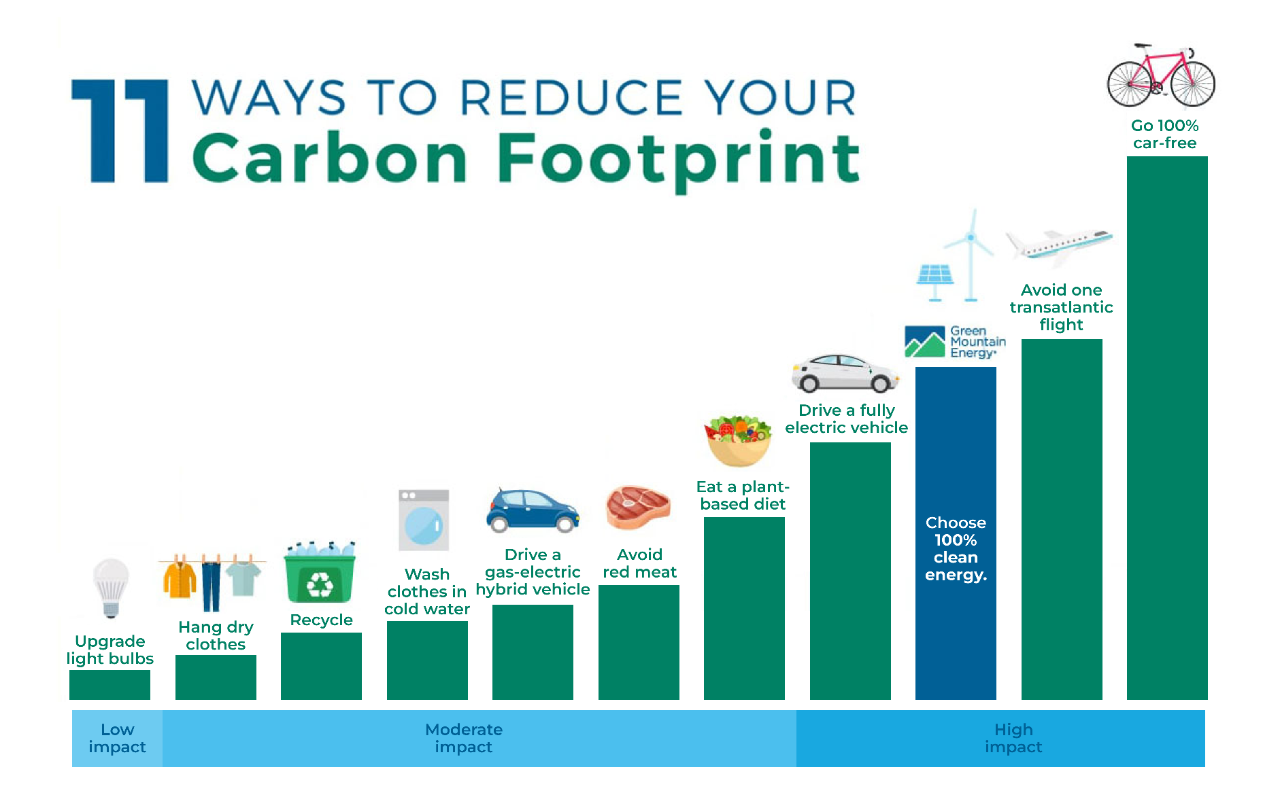
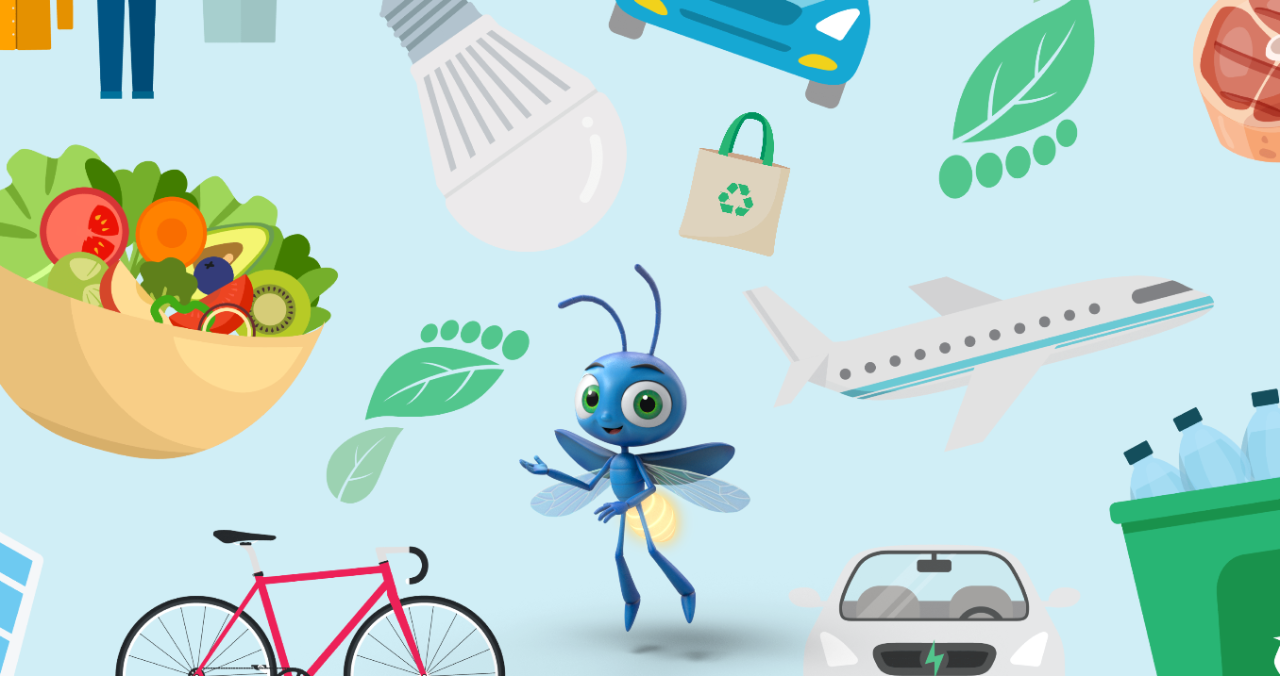
Based on some carbon impact studies, we’ve gathered a list of 11 effective ways that you can reduce your carbon footprint today, and exactly how many pounds of CO2 these practices can help you avoid in your daily life.
 

11 Proven Ways to Lower Your Carbon Footprint

Action

Impact level

Estimated annual 

greenhouse gas reduction

Upgrade to LED light bulbs Low impact Less than 400 pounds
Hang dry clothes Moderate impact 400-2,000 pounds
Recycle Moderate impact 400-2,000 pounds
Wash clothes in cold water Moderate impact 400-2,000 pounds
Drive a gas electric hybrid vehicle Moderate impact 400-2,000 pounds
Avoid red meat? Moderate impact 400-2,000 pounds
Eat a plant-based diet Moderate impact 400-2,000 pounds
Drive a fully electric vehicle High impact More than 2,000 pounds
Choose 100% clean energy High impact More than 2,000 pounds
Avoid one transatlantic flight High impact More than 2,000 pounds
Go 100% car-free High impact More than 2,000 pounds

The data may surprise you — some choices have a much bigger impact than others. But lowering your carbon footprint doesn’t have to happen all at once. Going completely car-free or following a plant-based diet every day may not be realistic for everyone, and that’s okay. Smaller, everyday changes can still add up and help you make meaningful progress over time.


The single biggest way to cut your footprint: your electricity. 

If you’re wondering what has the biggest impact on your ecological footprint, the answer depends on your lifestyle. For some people, it’s transportation. For others, it’s home energy, diet or buying habits.

But for many households, electricity is one of the easiest, high-impact places to start because it powers so much of daily life. The type of electricity you choose matters, too. 

That’s where renewable energy comes in. Choosing a 100% renewable energy plan can help support cleaner energy sources and make your home part of a bigger shift toward a more sustainable future.

As the longest-serving renewable energy retailer in the United States, we’re here to make that choice feel easy, useful and maybe even a little joyful.  

Find a renewable energy plan that helps your home go green.

Enter your ZIP code to get started.

Please enter a valid input

Frequently asked questions

That depends on your lifestyle, but common contributors include household electricity usage, transportation, diet and waste. If you’re looking for ways to reduce your carbon footprint, a good place to start is by looking at what you use every day. If you drive often, explore options like carpooling or riding your bike. If your home uses a lot of electricity, look for ways to reduce your usage and consider switching to renewable electricity.  

Yes, because it supports energy generated from cleaner sources like wind or solar instead of fossil fuel-based sources. While all energy sources have some environmental impact, renewable energy technologies generally emit less greenhouse gases than fossil fuel-based electricity, according to the National Laboratory of the Rockies (NLR). That means the electricity powering your home’s lights, appliances, devices and heating or cooling system can be connected to a cleaner energy choice.  

Composting can help reduce your carbon footprint by keeping food scraps and yard waste out of landfills, where they can release methane as they break down. Instead of sending those leftovers to the trash, composting turns them into nutrient-rich material that can support healthier soil and plants. It’s a simple way to waste less, reuse more and give your banana peels a second act. 

You can lower your carbon footprint without changing your whole lifestyle by starting with small, practical swaps. Try washing clothes in cold water, turning off lights when you leave a room, choosing reusable items, composting food scraps or reducing food waste during the week. You can also choose renewable electricity for your home, which helps support cleaner energy sources. Simple changes can still help you make a positive impact.

For many households, electricity usage is one of the biggest contributors to their carbon footprint because it supports so many everyday activities, from lighting and cooking to heating, cooling and charging devices. Transportation, especially driving and air travel, can also contribute significantly. The biggest source of emissions varies from person to person, but understanding where you use the most energy is a great place to start when looking for opportunities to reduce your impact.

Your carbon footprint includes more than just the electricity you use at home. Transportation, food choices, shopping habits and waste can all contribute to greenhouse gas emissions. However, choosing renewable electricity can be one meaningful step toward lowering your environmental impact and supporting cleaner energy sources. It's an easy way for many households to help make everyday electricity usage more sustainable.

One of the simplest high-impact places to start is with your home's electricity. Choosing renewable electricity, improving energy efficiency and reducing unnecessary energy usage can all help lower your carbon footprint. Other easy wins include switching to LED light bulbs, washing clothes in cold water and sealing air leaks around your home. Small steps can lead to meaningful progress and often fit into habits you already have.

Both choices can help reduce carbon emissions, but the impact depends on your lifestyle. If you frequently take long-haul flights, flying less may have a significant effect on your overall footprint. If you drive every day, switching to an electric vehicle may create meaningful reductions over time. Rather than focusing on a single "best" solution, it can be helpful to look at the activities that make up the biggest share of your footprint and start there.

Heating and cooling systems are often among the biggest electricity users in a home. Water heaters, clothes dryers, refrigerators and ovens can also account for a sizable share of household electricity usage. The exact amount varies by home and how often appliances are used. If you're looking for ways to reduce electricity usage, start with the systems and appliances you rely on most often and look for opportunities to improve efficiency.

Our customers have avoided


pounds of CO2

That’s like planting


new trees.